
Moving with method after 50: the scientific guide to safe and effective exercise
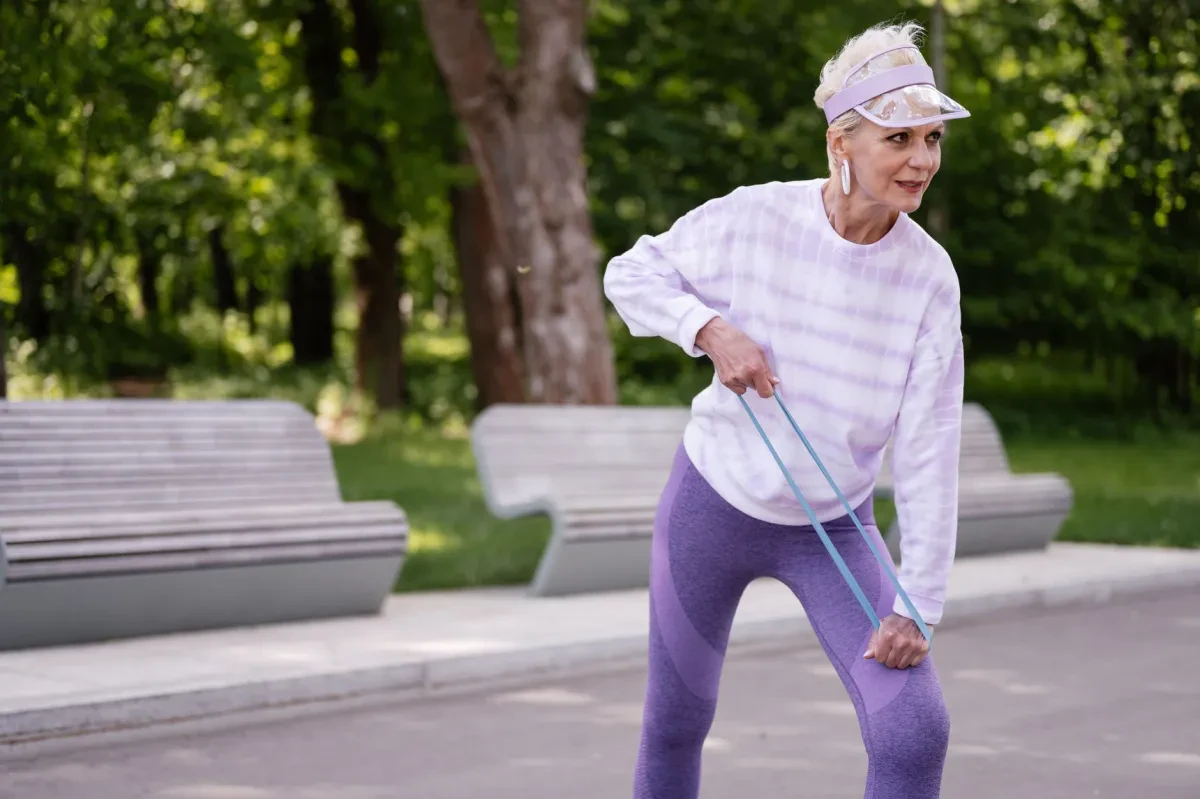
Just "moving around a little" isn't enough. After 50, exercise truly works only when it's prescribed with method. Here's what the science says — and how to apply it in real life.
The problem with "moving around a bit"
How many times have you heard — or said — "we need to move more"? It's good advice, but incomplete. After 50, the body changes significantly: muscle mass decreases, bone density drops, and balance becomes less stable. Moving at random isn't enough. A prescription is needed.
The term may sound clinical, but the concept is simple: exercise, like a drug, works best when dosed with precision — in type, frequency, intensity, and progression. This is exactly what the ACSM (American College of Sports Medicine) proposes with the FITT-VP model: Frequency, Intensity, Time, Type, Volume, Progression.
Why multicomponent beats everything else
The first thing science tells us about people over 50 is this: there is no single magic exercise. The ACSM is explicit: "The benefits of multicomponent exercise on physical function in older age are greater than those of single-component exercise."
An effective programme must integrate four areas:
- Aerobic — for heart, lungs, and general endurance
- Muscular resistance — to counteract the loss of mass and strength
- Balance and proprioception — to reduce the risk of falls
- Flexibility — to maintain joint mobility and quality of movement
It's not about doing everything together in a single session: it's about distributing these components intelligently throughout the week.
A concrete example of a typical week
Here is how a multicomponent week might be structured for an over-50 with a good fitness base:
- Monday: 30 min aerobic (walking, RPE 5–6) + 10 min stretching
- Tuesday: Resistance training (8–10 exercises targeting the main muscle groups, 2 sets, 10–12 reps)
- Wednesday: 40 min aerobic at higher intensity (RPE 7–8)
- Thursday: Balance and proprioception (e.g. Tai Chi 20 min, or balance exercises at home)
- Friday: Second resistance training day
- Saturday/Sunday: Free activity or active recovery
One detail that makes a real difference: it is not necessary to do 60 consecutive minutes of aerobic exercise. The ACSM confirms that three 20-minute sessions throughout the day have the same value. Accumulation is allowed — and often more sustainable.
Muscular strength: it's never too late
One of the most persistent myths is that, past the age of 50, the body no longer responds to strength training. The data says otherwise.
Studies cited by the NSCA show that sedentary individuals over 50, after just 12 weeks of resistance training, doubled the strength of their knee extensors and tripled that of their knee flexors. And these are not exceptional cases: subjects between 87 and 96 years of age showed significant strength gains after 8 weeks of training.
The ACSM prescription for resistance training in over-50s is clear:
- Frequency: at least 2 days/week, non-consecutive
- Intensity: 40–50% of maximum for beginners; 60–80% for those progressing
- Volume: 8–10 exercises targeting the major muscle groups, from 1 initial set up to 1–3 sets at full training load
- Progression: gradual increase in resistance, repetitions, or sets (5–10% per week)
Special attention should be paid to power training: performing movements at high speed (in the concentric phase) produces greater gains in power and strength compared to traditional training. It is particularly relevant for preventing falls and maintaining neuromotor reactivity.
The prescription is not the same for everyone
The FITT-VP model is not a rigid protocol: it is an adaptive framework. Those with competitive or amateur goals — a half marathon, a swimming race, a Spartan Race — start from the finish line and work backwards. Those who simply want to regain energy and reduce the risk of injury can start with lighter loads and slower progressions.
What matters is that there is a method. Because the body, after 50, does respond — but it demands to be listened to with precision.
Movement is our mission
In Strongers, sport is the means by which we fund oncology research. But it is also something more: it is concrete proof that a body over 50 can be a protagonist — high-performing, resilient. Not in spite of age — with age, and with the right method.