
Sarcopenia and muscle strength: why training your muscles matters after 50
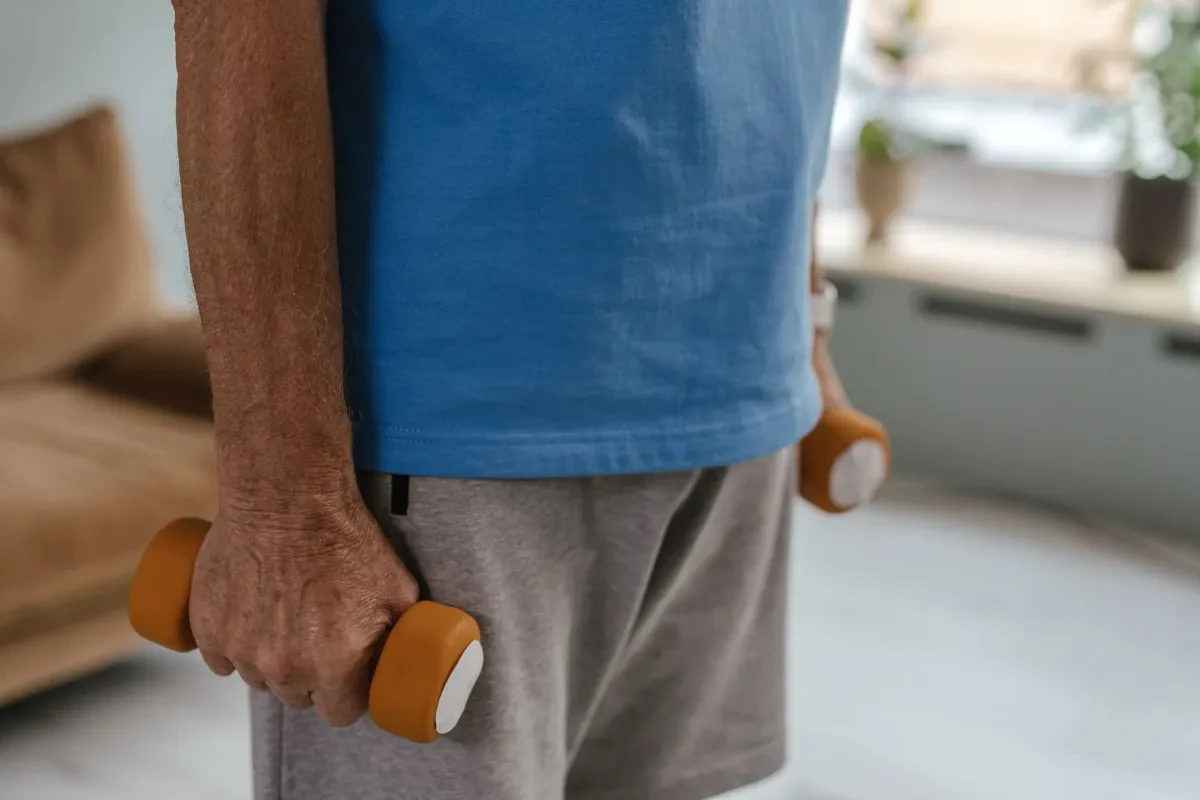
Sarcopenia — the progressive loss of muscle mass with age — is a clinical marker of frailty. Progressive resistance training can reverse it: +20–40% strength, +2–3% lean mass. Here's what the science says and how to apply it.
Muscle is not just aesthetics: it's a vital organ
If you think lifting weights is only for bodybuilders, it's time to think again. For anyone over 50 — and for anyone who wants to stay healthy longer — skeletal muscle is one of the best preventive allies science knows. And its progressive loss, known as sarcopenia, is a silent but measurable phenomenon that affects everyone, athletes included.
What is sarcopenia, and why it's not just "a matter of age"
Sarcopenia is the degenerative loss of muscle mass and strength as a result of ageing. It is not a side effect of a sedentary lifestyle or malnutrition: it is an autonomous biological process, recognised in the scientific literature as a clinical marker of frailty.
According to the American College of Sports Medicine (ACSM), people with sarcopenia share one crucial characteristic: they must regain baseline muscle strength before they are physiologically able to engage in aerobic training effectively. In other words, strength is not the cherry on top — it is the foundation.
A frequently overlooked detail: even brief periods of immobility — an illness, a hospitalisation, a forced break from training — significantly accelerate muscle loss in people over 50. The margin for error narrows with age.
How is strength measured? From the lab to the chair at home
There are two main families of tests for assessing muscle strength:
- Laboratory tests (1-RM): the scientific gold standard, measuring the maximum resistance that can be lifted in a single repetition (e.g. leg press). It requires equipment and supervision, but provides precise and comparable data.
- Functional tests: accessible to everyone, measuring real-life capacity in daily activities. The most commonly used are the 30-second chair stand test (how many times you can stand up from a chair in 30 seconds) and grip strength (measured with a dynamometer).
The ACSM reference values are clear. For women aged 60 to 64, the reference threshold for independence is 15 stands in 30 seconds; for men in the same age group, 17 stands. Falling below these thresholds signals a high risk of functional disability and falls. A grip strength below the 25th percentile for age and sex is considered a potential signal of sarcopenia or frailty.
The good news: sarcopenia can be countered, with the right method
The science is encouraging. Progressive resistance training — i.e. weight or load training — is the most effective documented intervention for countering sarcopenia. ACSM data show that structured resistance training programmes lead to:
- +20–40% gain in strength (measured as 1-RM)
- +2–3% gain in lean mass
- Effects maintained over the long term (1–2 years) with continuous compliance
The ACSM prescription for over-50s is precise and achievable:
- Frequency: at least 2 days per week, non-consecutive (recovery counts as much as training)
- Intensity: 40–50% of maximum for beginners, up to 60–80% for those progressing
- Volume: 8–10 exercises targeting the major muscle groups, 1 to 3 sets per exercise
- Progression: increase resistance, repetitions, or sets by 5–10% per week
One often-overlooked element: power training — exercises performed at high speed — is particularly relevant for over-50s, because muscular power declines more rapidly than pure strength with age.
Who researches all this? A scientist worth knowing
One of the leading scientific figures in this field is Maria A. Fiatarone Singh, Professor of Exercise and Sport Science at the University of Sydney and formerly a researcher at Tufts University. Her work has played a fundamental role in establishing the effectiveness of resistance training for preserving muscle mass and function in over-50s, with a specific focus on women. A concrete example of how academic research produces results applicable to everyday life.
Training is an act of care
At Strongers we believe that training is not just a personal choice: it is an act of care for yourself, one that preserves strength and independence with age. And those who train with us do so also to support oncology research.
Stay strong. Literally.