
Stronger bones, longer life: what science says about exercise and bone density
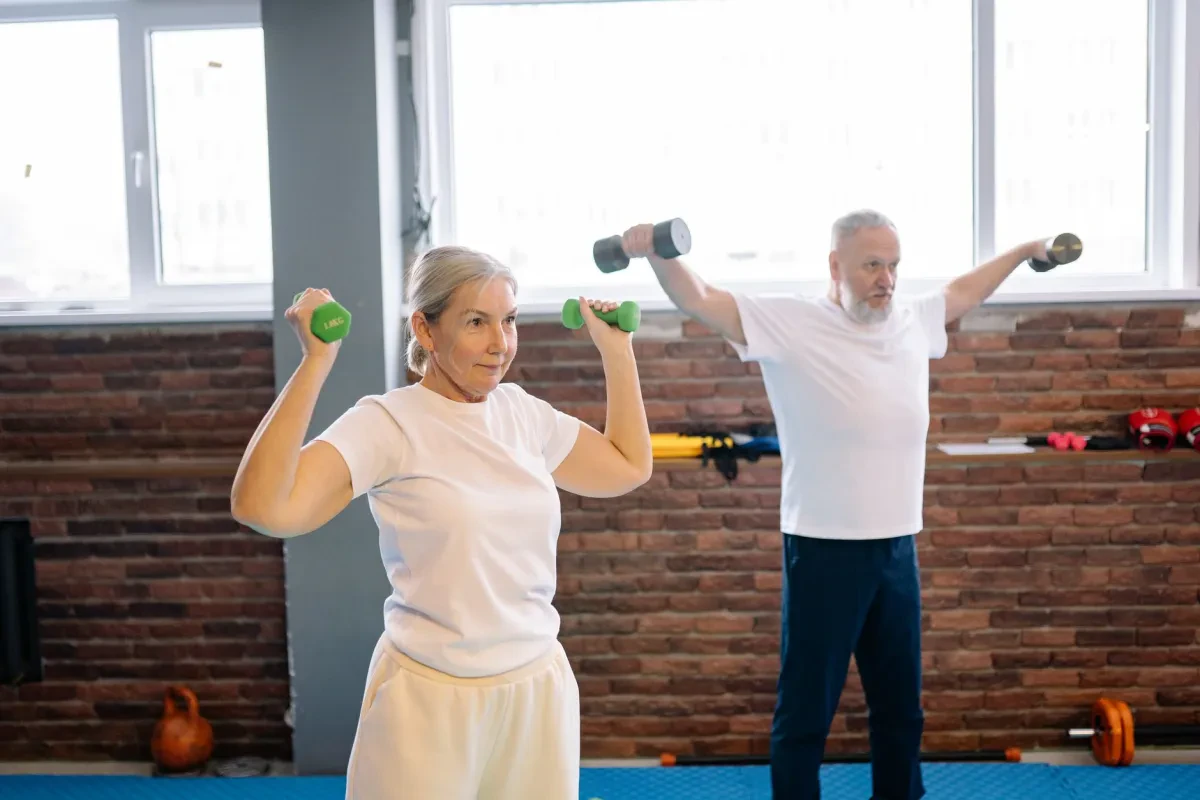
Bone density is not a written destiny: exercise is the mechanical stimulus that tells bone to stay strong. Here is what science says for those over 50.
Bones are not static structures: they adapt to how you use them
There is a finding that shifts the perspective on ageing and health: bones respond to the mechanical stimulus of exercise. This is not a motivational metaphor — it is physiology. When muscles contract, they transmit mechanical forces to bone through tendons. The bone "interprets" that signal and responds by activating osteoblasts — the cells that build new bone tissue — and reducing the activity of osteoclasts, which instead reabsorb it. The result: denser, stronger bones that are less prone to fracture.
Unlike nutrition, which supplies the raw materials (calcium, phosphorus), exercise is the signal that tells bone to use them. Without that signal, the materials go unused.
After 50, the risk accelerates — especially for women
Bone mineral density (BMD) is the mass of mineral per unit of bone volume. We reach peak bone mass around age 30; after that threshold, the balance progressively shifts towards reabsorption.
For women, menopause represents a sharp acceleration: between 1% and 2% of BMD is lost every year for the 5 years that follow. Over time, this silent loss leads first to osteopenia (an early, asymptomatic stage that can last 20–30 years) and then to full-blown osteoporosis, with a high fracture risk.
Osteoporosis is defined as a "silent disease": conventional X-rays cannot detect it until at least 30% of bone mass has already been lost. At that point, the consequences can be serious:
- Wrist fractures (Colles): common between the ages of 50 and 70, often from a trivial fall
- Vertebral fractures: after age 60, these can be spontaneous or result from minimal trauma, causing loss of height and kyphosis (the so-called "widow's hump")
- Hip fractures: beyond age 70, with exponential increase; 50% of those affected never walk independently again, and 30% become completely dependent
80% of osteoporosis cases affect women. But the risk exists for men too, and is underestimated.
The effect is local: train your legs, protect your femur
One of the most interesting findings to emerge from research is the localisation of the effect. A classic example: professional tennis players show significantly greater bone mass in the dominant forearm compared to the non-dominant one. This is not a systemic effect — it is the local mechanical load that makes the difference.
This means that targeted exercises have precise effects: working the quadriceps protects the femur, exercises for the back extensor muscles protect the spine. Exercise prescription for bone health is not generic: it is surgical.
Age is not a destiny
The decline in bone density with age is physiological, but its speed also depends on how we move. Age is not a destiny. Sedentary behaviour accelerates bone loss; regular physical activity — particularly strength training and load-bearing work — can not only slow that loss, but in some cases partially reverse it.
The reference diagnostic tool is DXA (Dual Energy X-ray Absorptiometry), the gold standard for measuring bone density. It uses an extremely low radiation dose — roughly one tenth of a standard X-ray — and measures the hip, spine and whole body, comparing results against age-group norms. It is a valuable tool for understanding your starting point and monitoring progress over time.
Why this matters for Strongers
Strongers was born from the conviction that sport is a powerful tool — for prevention, for community, for meaning. The data on bone density remind us that moving is never merely a matter of aesthetics or performance: it is an act of self-care, measurable and documented by science.
Preventing fractures means preventing the loss of independence. It means staying on your feet — literally and metaphorically. And for those who train with us, knowing that every kilometre run, every weight lifted, every balance session builds stronger bones is one more reason not to stop.
Balance is trained. Bones are trained. And it is never too late to start.