
Training for Triathlon: Method, Multisport and a Charitable Mission
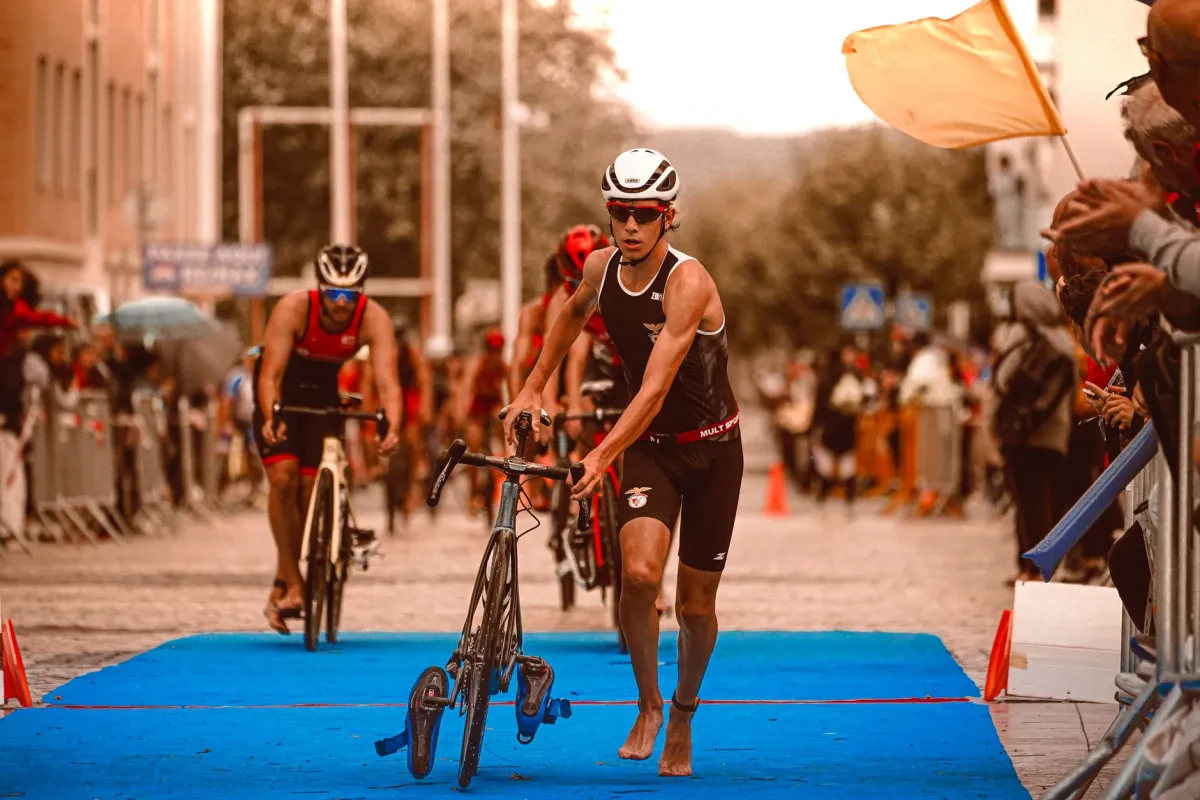
Triathlon is not the sum of three sports: it's an integrated architecture of swimming, cycling and running. Discover the annual periodisation methodology, the T1-T8 heart rate zones and the core/peripheral principle — so you can train with method and mission.
Three disciplines, one unified architecture
Anyone approaching triathlon for the first time almost always makes the same mistake: adding three sports together instead of building a single one. Swimming, cycling and running are not simply three workouts lined up in a row — they form a coherent architecture in which each discipline strengthens and adapts the others. This is the fundamental premise of any serious triathlon preparation, and the starting point from which every Strongers athlete should think.
The year is planned, not improvised
The integrated triathlon methodology is structured around three annual macrocycles:
- Preparation (Prep): from February to May for beginner and senior 40+ athletes, from January to May for ambitious/elite profiles. Goal: build the aerobic base, refine technique, and progressively increase volume.
- Competition: from June to September (or October for more advanced profiles). This is the phase of peak performance and race specificity.
- Transition/Recovery: the often underestimated period, dedicated to physical and mental recovery — essential for preventing burnout and preparing for the next cycle.
Without this planning, you risk arriving at race day — or worse, the entire season — already depleted.
Core and Peripheral: the pairing that cannot be broken
Every triathlon training week rests on two types of sessions that cannot exist without each other:
- Core Training: the high adaptive-stimulus session — long or intense, 1–2 times per week per discipline. It is the heart of improvement.
- Peripheral Training: low-intensity sessions focused on active recovery and general adaptation. These are not "filler" workouts: they are the physiological support that makes the next core session possible.
A concrete example for an ambitious athlete with 10 hours per week: Monday swim core (1h at T5, threshold zone); Tuesday peripheral bike (1.5h at T2–T3, easy); Wednesday run core (1h at T6, race pace); Thursday recovery bike. The principle is always the same: strong stimulus, then adaptation — never two consecutive core sessions in the same discipline without recovery in between.
Heart rate zones: from T1 to T8
Managing intensity is one of the most concrete and actionable elements of the triathlon methodology. The T1–T8 system based on percentage of maximum heart rate provides a clear guide:
- T1–T2 (65–70% HRmax): regeneration and fat metabolism — long, easy sessions.
- T3–T4 (75–80% HRmax): building the cardiovascular base and beginning tempo work.
- T5 (85% HRmax): the anaerobic threshold — the single most important work level for improving fatigue resistance.
- T6–T7 (90–95% HRmax): race intensity and anaerobic zone, used in short intervals.
- T8 (100% HRmax): maximal effort, reserved for actual competition.
Training below T5 for 70–80% of the time is not laziness: it is performance science. The most common mistake among amateur athletes is training at a medium intensity throughout, losing both the benefits of recovery and those of high intensity.
Swimming, cycling, running: each with its own rules
Each discipline has specific priorities that cannot be ignored:
- Swimming: technique comes before volume. Reducing stroke count per length — from 20 to 18, for example — means less drag and more speed. A high elbow during the pull and body rotation are fundamental.
- Cycling: it is the discipline that absorbs the most time (2 to 5 hours per session at medium-to-long distances). Daily integration is essential — even cycling to work or running errands counts. Saddle posture is critical for both performance and injury prevention.
- Running: it comes after hours of swimming and cycling. Transitions (brick training) must be practised separately, not improvised on race day.
Training for something greater
In Strongers, every kilometre covered in training and in racing carries a meaning that goes beyond the clock. Building a serious triathlon preparation — with method, periodisation and respect for your own body — is the best way to cross the finish line. And every finish line we reach together fuels the oncology research we are committed to supporting.
Method is not a luxury reserved for elites: it is the respect we owe to our commitment and to the mission we carry with us on race day.